
- Fasting After 60: Potential Benefits, Risks, and Precautions
- ⏳ What is intermittent fasting?
- 🔬 What happens to the body without food?
- 🌿 What benefits do the researchers suggest?
- ⚖️ Can fasting help you lose weight after 60?
- 💪 The main risk is loss of muscle mass
- 💧 Dehydration and electrolyte imbalances
- 💊 Why can fasting interfere with medications?
- 🩸 Hypoglycemia: A particular danger in diabetes
- 🚫 Who might not benefit from fasting?
- ✅ Which option is considered the most cautious?
- 🥗 What should you eat during the permitted hours?
- 🏋️ How to maintain muscle mass while losing weight?
- 📋 What to check before starting?
- 🛑 When should fasting be stopped immediately?
- 🧠 Does fasting prolong life?
- ⚖️ The benefits must outweigh the risks
- 🌿 Conclusion
- 📚 Scientific sources
Fasting After 60: Potential Benefits, Risks, and Precautions
Intermittent fasting has become one of the most discussed trends in modern dietetics. Its proponents claim it promotes weight loss, improved insulin sensitivity, and activation of cellular repair mechanisms. However, after age 60, the body changes, so methods that are relatively easy for younger people may pose additional risks for older adults.
Age alone is not an absolute contraindication to moderate time-restricted eating. However, after age 60, it is especially important to consider the health of the heart, kidneys, liver, glucose levels, medications taken, body weight, and muscle integrity.
The main principle can be formulated as follows: fasting should help maintain health, and not become a test of endurance.
⏳ What is intermittent fasting?
See also: Intermittent fasting is a regimen in which periods of eating are alternated with periods of abstinence. Unlike a regular diet, the focus is not only on the composition of the diet but also on the timing of meals.
The most common options are:
- 12/12 - 12 hours for meals and 12 hours for a night break;
- 14/10 - 10-hour and 14-hour fast without calories;
- 16/8 - eight hours for eating and 16 hours for fasting;
- 5:2 - normal diet five days a week and significant calorie restriction for two days;
- суточное голодание - refusal of food for about 24 hours;
- prolonged fasting - lack of food for several days.
These regimens vary significantly in terms of the strain they place on the body. After age 60, starting with extended periods of fasting is especially risky. A simple overnight break of about 12 hours is generally considered the most gentle option.
🔬 What happens to the body without food?
See other pages in this section . After eating, the body uses ingested glucose for energy, storing some of the excess as glycogen in the liver and muscles. When food is not consumed for a while, insulin levels gradually decrease, and the body begins to more actively use its stored energy reserves.
As glycogen is depleted, fatty acid utilization increases. During prolonged periods without food, the liver begins to produce ketone bodies, which can serve as an additional energy source.
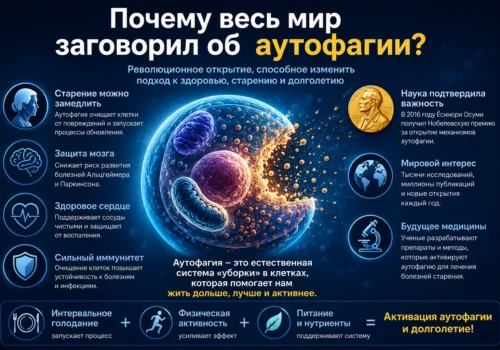
At the same time, the activity of cellular signaling pathways associated with growth, repair, and recycling of damaged components changes. One such process is autophagy.
However, it's impossible to say with certainty that autophagy "turns on" within a certain number of hours in every person. Most of the precise data comes from cell and animal studies. In humans, the intensity of this process depends on age, physical activity, the composition of the last meal, metabolism, and other factors.
🌿 What benefits do the researchers suggest?
Studies of intermittent fasting in adults show several potentially beneficial effects. However, results vary, and older adults are underrepresented in many studies.
Possible benefits include:
- reduction of the total caloric content of the diet;
- moderate reduction in body weight and waist circumference;
- improving insulin sensitivity in some people;
- reducing the number of late-night snacks;
- reduction of individual metabolic risk indicators;
- a more organized diet;
- Coordination of food intake with circadian biological rhythms.
However, modern reviews do not confirm that intermittent fasting is significantly superior to traditional moderate calorie restriction. In many cases, both approaches produce comparable results.
The benefit may not be due to the long break itself, but because the person stops snacking constantly, eats less in the evening, and reduces the overall calorie intake.
⚖️ Can fasting help you lose weight after 60?
 If you're overweight, moderate weight loss can improve mobility, blood pressure control, and metabolic health. Restricting meal times can sometimes help reduce food intake without constantly counting calories.
But after age 60, weight loss should be done with particular caution. Along with fat, a person can lose muscle and bone mass. This increases the risk of weakness, falls, fractures, and loss of independence.
Therefore, the goal should not be to reduce the number on the scale as quickly as possible, but rather to primarily reduce fat mass while maintaining muscle mass.
To do this you need:
- sufficient amount of complete protein;
- regular strength training appropriate to your health condition;
- gradual rather than sudden reduction in calorie intake;
- control of strength, well-being and body weight;
- proper nutrition during permitted hours.
💪 The main risk is loss of muscle mass
With age, sarcopenia—a decline in muscle mass, strength, and functional capacity—gradually develops. The elderly body responds less well to small amounts of protein, so a balanced diet and exercise are especially important for stimulating muscle synthesis.
An overly narrow eating window can result in a person simply not getting the necessary amount of protein and energy. Combining prolonged fasting with sedentary lifestyles is especially dangerous.
You should pay attention not only to the weight, but also to the functional characteristics:
- it became more difficult to get up from a chair without using your hands;
- walking speed decreased;
- an unusual weakness appeared;
- it became more difficult to climb the stairs;
- decreased wrist strength;
- I had problems with balance.
If such changes occur while fasting, the regimen must be stopped and the situation must be discussed with a doctor.
💧 Dehydration and electrolyte imbalances
With age, the sensation of thirst may become less pronounced, and the kidneys' ability to regulate water and salt balance may decline. Some older people also take diuretics.
Therefore, abstaining not only from food but also from water can be particularly dangerous. Dry fasting has no proven advantages over water-permitted regimens and can increase the risk of dehydration, low blood pressure, kidney damage, and blood clots.
During moderate intermittent fasting, water and unsweetened beverages are usually allowed unless your doctor has prescribed fluid restrictions due to heart or kidney disease.
Signs of possible dehydration:
- dry mouth;
- infrequent urination and dark urine;
- dizziness when standing up;
- severe weakness;
- cardiopalmus;
- confusion.
💊 Why can fasting interfere with medications?
After age 60, many people regularly take multiple medications. Some medications must be taken with food, others can irritate the stomach on an empty stomach, and still others affect glucose levels or blood pressure.
Special care should be taken when taking:
- insulin;
- drugs that can cause hypoglycemia;
- diuretics;
- some medications for high blood pressure;
- anticoagulants;
- anti-inflammatory drugs;
- medications that are instructed to be taken with food.
Do not skip, delay, or reduce medication doses on your own to adhere to the meal window. Only a doctor can adjust your treatment regimen.
🩸 Hypoglycemia: A particular danger in diabetes
Fasting while taking insulin or certain hypoglycemic medications can lead to excessive drops in glucose levels. In older adults, hypoglycemia increases the risk of falls, injuries, abnormal heart rhythms, and loss of consciousness.
Possible signs of hypoglycemia:
- shiver;
- cold sweat;
- severe hunger;
- dizziness;
- cardiopalmus;
- unusual irritability;
- impaired vision;
- confusion.
If such symptoms occur, do not continue fasting for the sake of adherence. You should check your glucose levels, if you have a glucometer, and follow your doctor's prescribed hypoglycemia treatment plan.
People with diabetes should discuss any fasting options with an endocrinologist before beginning the experiment.
🚫 Who might not benefit from fasting?
 You should not practice intermittent, daily, or prolonged fasting on your own in the following conditions:
- underweight;
- unintentional weight loss;
- sarcopenia, severe weakness or frailty;
- diabetes mellitus associated with drug therapy;
- chronic kidney or liver disease;
- heart failure and unstable blood pressure;
- heart rhythm disturbances;
- active diseases of the stomach and intestines;
- oncological disease and the period of active treatment;
- recovery from surgery, infection or injury;
- current or past eating disorders;
- cognitive impairment that makes it difficult to monitor the regimen and medications.
Being over 60 doesn't automatically prohibit you from taking the drug. However, the combination of age and chronic illnesses requires a personalized risk assessment.
✅ Which option is considered the most cautious?
If the doctor has not found any contraindications, it is wiser to start not with a 16- or 24-hour fast, but with a regular night break.
A careful sequence might look like this:
- Give up constant nighttime snacking.
- Finish dinner approximately two to three hours before bedtime.
- Observe a night break of about 12 hours, for example from 7:00 pm to 19:00 am.
- Over the course of several weeks, assess sleep, blood pressure, appetite, strength, and general well-being.
- Only if well tolerated and after consultation with a specialist should the 14/10 window be considered.
For many older adults, a 12/12 schedule is sufficient. There's no evidence that the longest fasting period necessarily yields the greatest benefits.
🥗 What should you eat during the permitted hours?
Intermittent fasting doesn't mean you can eat anything during the eating window. If your diet consists primarily of sweets, processed meats, baked goods, and other ultra-processed foods, a single change in schedule is unlikely to yield significant benefits.
It is advisable to base your diet on:
- vegetables and herbs;
- whole fruits and berries;
- legumes;
- fish, eggs, fermented milk products or other suitable sources of protein;
- whole grain products;
- nuts and seeds;
- unsaturated fats;
- sufficient amount of liquid.
It's especially important to spread protein intake over several meals rather than trying to get your entire daily intake in one huge dinner.
🏋️ How to maintain muscle mass while losing weight?
Without physical activity, even a complete protein diet may not be enough to preserve muscle.
The greatest benefits are usually achieved by:
- bodyweight exercises;
- exercises with elastic band;
- exercises with small dumbbells;
- getting up from a chair without using hands;
- walking;
- balance exercises.
The intensity of exercise should be adjusted based on the condition of the joints, heart, and blood vessels. If a person hasn't exercised in a while, it's best to consult a doctor or physical therapist before starting.
📋 What to check before starting?
Before changing your regimen, it is helpful to discuss with your doctor:
- body weight and its changes over the past months;
- blood pressure;
- glucose and glycated hemoglobin levels;
- kidney and liver function;
- list of medications taken;
- presence of anemia and deficiencies;
- muscle condition and risk of falls;
- safe duration of the meal break.
It's helpful to record your meal, sleep, medication, and physical activity times in advance. This will help you create a routine that won't conflict with your treatment and daily life.
🛑 When should fasting be stopped immediately?
Don't tolerate dangerous symptoms just to reach a certain number of hours. Fasting should be stopped if:
- fainting or pre-fainting condition;
- confusion;
- severe dizziness;
- chest pain or pressure;
- shortness of breath;
- heart rhythm disturbances;
- severe trembling and cold sweat;
- a sharp drop in pressure;
- uncontrollable vomiting;
- sudden weakness;
- lack of urination or other signs of dehydration.
If you experience chest pain, loss of consciousness, severe shortness of breath, or severe confusion, seek immediate medical attention.
🧠 Does fasting prolong life?
In experiments on some animals, calorie restriction and certain dietary regimens did indeed affect lifespan and the development of age-related diseases.
However, animal studies cannot be automatically extrapolated to humans. There is currently no convincing evidence that a specific intermittent fasting regimen guarantees longevity in humans, especially those who begin the practice after age 60.
There is significantly more evidence for the benefits of regular physical activity, quitting smoking, controlling blood pressure, getting enough sleep, and eating a balanced diet.
Therefore, fasting should not be considered as a means of rejuvenation or guaranteed longevity, but as one of the possible ways to organize nutrition.
⚖️ The benefits must outweigh the risks
For obese individuals with preserved muscle mass and no serious contraindications, moderate time-restricted eating may be beneficial. It can reduce evening snacking and help control calories.
For a thin person with weakness, muscle loss, unstable blood pressure, or a lot of medication, the same regimen may do more harm than good.
Therefore, after 60 years, it is not the calendar age that is important, but a combination of several factors:
- health conditions;
- functional independence;
- muscle strength;
- body mass;
- quality of diet;
- drug therapy;
- tolerance of meal breaks.
🌿 Conclusion
Fasting after age 60 may have some benefits, but it's not a universal health strategy. A moderate nighttime fast can help regulate your eating habits and reduce late-night snacking. However, prolonged and strict fasting regimens increase the risk of dehydration, hypoglycemia, muscle loss, and drug interactions.
The most sensible strategy after age 60 is to start with quality foods, sufficient protein, manageable strength training, and adequate sleep. Only then can we consider changing our eating window.
Safe fasting isn't about going without food for as long as possible. It's a regimen that doesn't reduce strength, doesn't worsen well-being, and doesn't interfere with the treatment of chronic diseases.
Medical Disclaimer: This article is for general information purposes only and does not replace medical advice. Do not change medication dosages or begin prolonged or dry fasting without medical supervision. If you have diabetes, heart disease, kidney disease, liver disease, low body weight, or loss of muscle strength, consult a specialist first.
📚 Scientific sources
- National Institute on Aging - Calorie Restriction and Fasting Diets: What Do We Know?
- National Institute on Aging - Research on Intermittent Fasting
- Impact of Intermittent Fasting and Caloric Restriction – A Review of Research
- Time-Restricted Eating and Age-Related Muscle Loss
- Aging, Obesity, Sarcopenia and the Effect of Diet and Exercise
- American Diabetes Association - Low Blood Glucose
"`