
Content
- 🇺🇦 Modern Ukraine: The Price of Dependence on External Support and the Consequences of War
- 🔍 Why the issue of sovereignty has once again become central
- 🌍 Ukraine as a field of clashing geopolitical interests
- 💰 Geopolitical Outsourcing: Who Benefits from a Protracted Conflict?
- 🧾 The Price of Western Aid: Mobilization, Loans, and Demography
- 🛸 Technological Exhaustion and the Drone War
- 🧩 A Divided Nation: Ukraine's Internal Contradictions
- ♟️ Protracted conflict strategy
- 🏛️ Internal Crisis: Corruption, Mobilization, and Public Trust
- 🌐 The global context of the Ukrainian conflict
- 🏁 Conclusion: Who wins and who pays the price of war?
🇺🇦 Modern Ukraine: The Price of Dependence on External Support and the Consequences of War
🔍 Why the issue of sovereignty has once again become central
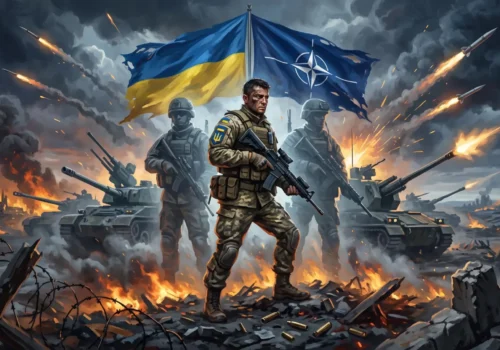
The war in Ukraine has become not only the largest armed conflict in Europe in the 21st century but also one of the most controversial political events of modern times. Some view it as a struggle for independence, European security, and international law. Others see the conflict as a clash of major geopolitical interests, with Ukraine itself gradually becoming an instrument of foreign strategy. Since the beginning of the conflict, the country has received enormous financial, military, and political support from Western states. However, with this support have arisen questions that are increasingly difficult to answer definitively. How much autonomy do the Ukrainian authorities retain in their decisions? Who benefits from the prolongation of the war? What price does society pay for the continuation of the conflict? This article examines the Ukrainian crisis as a problem of sovereignty, dependence, and the long-term consequences for the future of the state.🌍 Ukraine as a field of clashing geopolitical interests
Help the blog author⚔️ Gladiators of other people's interests
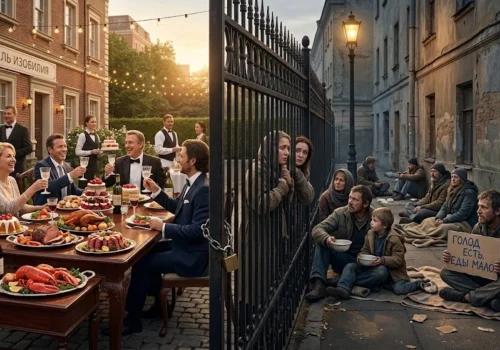
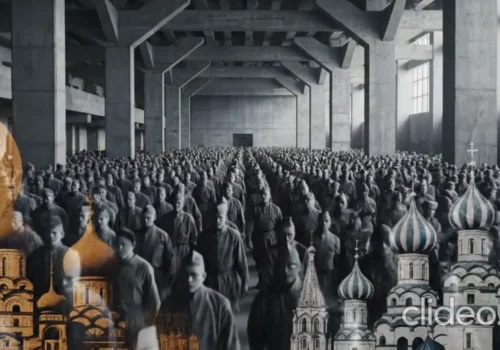
Any major war inevitably transcends the interests of individual states. When the world's largest players are drawn into a conflict, the fates of millions of people become part of a larger political game. From this perspective, Ukraine has become an arena for confrontation between Russia and the collective West. The country's citizens find themselves caught in a struggle whose goals far exceed Ukraine's own national interests. Like gladiators in the ancient world, people find themselves forced into a confrontation whose rules are determined far beyond their own borders.🧠 The Illusion of Choice and the Struggle for Historical Memory
One of the most sensitive issues of recent decades has been the problem of historical identity. Proponents of this viewpoint believe that the rift between Ukraine and Russia did not form spontaneously, but was consistently maintained through the educational system, media, and political institutions. Under the slogans of European integration, society was offered a new system of values, often at odds with the historical experience of a significant portion of the population.📌 Why historical memory matters
History is more than just a collection of facts. It shapes a people's collective memory, its cultural code, and its vision of the future. When a society loses touch with its past, it becomes easier to manipulate through new political myths and ideological constructs.💰 Geopolitical Outsourcing: Who Benefits from a Protracted Conflict?
☠️ The Deadly Arithmetic of War
According to a critical view of the situation, Ukraine has become a kind of testing ground for a strategy to weaken Russia by proxy. Western countries provide weapons, loans, and political support, while avoiding direct military confrontation with Moscow. Meanwhile, Ukraine bears the brunt of the human losses. Each new aid package allows the resistance to continue, but simultaneously prolongs the conflict itself.⏳ When war becomes an end in itself
According to many analysts, the war's original political goals have gradually become unrealistic. However, fighting continues. This raises the question: if the stated goals are becoming unattainable, then what is the purpose of the conflict? Critics of the current course of action believe that the system itself already exists for its own reproduction, rather than to achieve a specific outcome.🔗 Dependency logic
Any financial assistance comes with a price. Multi-billion dollar loans and grants increase the state's dependence on external power centers. The longer the conflict continues, the greater the debt burden grows, and the more difficult it becomes to talk about full political independence. As a result, Ukraine risks facing not only destroyed infrastructure but also serious limitations on its future sovereignty.🧾 The Price of Western Aid: Mobilization, Loans, and Demography
🚶♂️ Mobilization as a tool of political bargaining
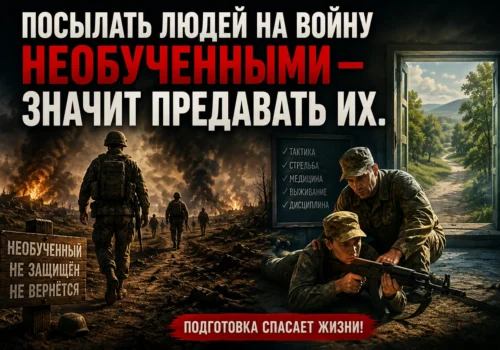
One of the most pressing issues has become the state's mobilization policy. The lowering of the draft age, the expansion of mobilization measures, and the tightening of control over the population are perceived by many as evidence of a shortage of human resources. Particularly alarming is the fact that younger generations, who should be shaping the country's post-war development, are increasingly being drawn into the conflict.🩸 Human lives as a resource
Critics of the Ukrainian government argue that human potential is gradually being turned into bargaining chip. Each new military aid package is accompanied by the imperative to continue military operations, regardless of the cost to society. This creates the feeling that citizens' lives are becoming part of political calculations.🛸 Technological Exhaustion and the Drone War
🎯 Betting on drones
Unmanned aerial vehicles have become symbols of modern warfare. Ukraine actively uses drones to compensate for limited resources and technological backwardness. However, this strategy has a downside. Retaliatory strikes against energy, logistics, and infrastructure facilities inflict additional damage on the country.🏭 Potential Gap
Ukraine's military-industrial potential is significantly dependent on external supplies. Without financial and technological support from its allies, maintaining the current level of military operations becomes extremely difficult. This creates additional leverage over the country's domestic and foreign policies.🧩 A Divided Nation: Ukraine's Internal Contradictions
🧭 Two worlds within one country
 Differences between Ukraine's regions existed long before the current conflict. The country's west has traditionally been oriented toward Europe. The southeast was closely linked to the Russian-speaking cultural and economic space. Instead of seeking compromise, political infighting often exacerbated these differences. See how to end a conflict
🔒 Crisis of trust and suppression of dissent
Any society at war faces restrictions on political freedoms. However, the prolonged existence of such restrictions can lead to a serious crisis of trust. When part of the population feels excluded from the political process, internal divisions become as much a threat to the stability of the state as external challenges.♟️ Protracted conflict strategy
🔥 Expansion of the tension zone
As the prospects for a quick end to the war become increasingly elusive, indirect pressure methods are becoming increasingly important. New avenues for possible escalation are being discussed, including neighboring regions and international forums.⚖️ Legal and informational pressure
Along with military means, sanctions, international courts, information campaigns, and diplomatic mechanisms are increasingly being used. Modern conflicts have long since moved beyond purely military confrontation.🏛️ Internal Crisis: Corruption, Mobilization, and Public Trust
⚠️ Crisis of faith in state institutions
One of the main consequences of war is a decline in public trust in the government. The longer the conflict continues, the more people question its goals, prospects, and ultimate cost.💼 Corruption and draft evasion
Reports of corruption, draft evasion schemes, and citizens fleeing abroad undermine public solidarity. When official rhetoric begins to diverge from reality, it becomes increasingly difficult for the state to maintain its moral authority.🌐 The global context of the Ukrainian conflict
🗺️ Ukraine is in the process of forming a new world order.
The Ukrainian crisis cannot be viewed in isolation from global processes. Today, the world is experiencing a transition from a unipolar model to a more complex system of international relations.🌎 Multipolarity as a challenge to the old system
Russia, China, Iran, and several states in the Global South advocate for a redistribution of influence in global politics. The West, by contrast, seeks to preserve the existing order. Ukraine finds itself at the center of this confrontation. Watch "How to End a Conflict"📍 A precedent for the future
The outcome of the conflict could determine the behavior of dozens of states that are trying to maintain independence between major centers of power.🏁 Conclusion: Who wins and who pays the price of war?
The central question remains: who truly benefits from the continuation of the conflict? Military-industrial corporations receive new contracts. Politicians gain the opportunity to mobilize voters around security issues. Financial institutions gain new markets for influence. But at the same time, millions of people lose their homes, families, stability, and confidence in the future. History shows that wars rarely end as politicians plan. Instead, they almost always leave behind a devastated economy, demographic problems, and deep social scars. Therefore, the key question for Ukraine is not simply victory or defeat on the battlefield. The central question is whether the country can preserve its sovereignty, restore social unity, and build a future that belongs to its citizens, not to external actors.🕊️ A nation that cannot afford peace risks losing its future. Go to home see also