Content
- Beyond Ethics: What Happens When You Deprive a Child of Human Speech? 🗣️🚫
- Frederick II's Cruel Experiment 👑
- In Search of the Proto-Language: From Egyptian Pharaohs to Indian Padishahs 🌍
- Mowgli Syndrome: When Life Itself Conducts a Cruel Experiment 🐺
- The Critical Period Hypothesis: Why Lost Time Can't Be Recovered? 🧠⏳
- Why did babies die? The mystery of emotional hunger 💔
- Conclusion 📌
Beyond Ethics: What Happens When You Deprive a Child of Human Speech? 🗣️🚫
This short video explores one of the darkest, yet intriguing, topics in the history of science: the impact of speech and social interaction on human survival and development. As is rightly noted, children who are isolated and deprived of timely exposure to human speech grow up with severe intellectual disabilities and, in the worst cases, die.
To understand how deeply language and communication are woven into our DNA 🧬, humanity has for centuries wondered: do we have an "innate" language? What if a child grows up completely silent—will they speak the language of Adam and Eve, or will they remain mute? Attempts to answer this question have given rise to what scientists today call the "Forbidden Experiment."
Frederick II's Cruel Experiment 👑
In the 13th century, the ruler of Sicily and Holy Roman Emperor Frederick II of Hohenstaufen decided to conduct a highly unethical experiment. A curious man, he set out to discover what language is "natural" and primordial for humans. He believed that if an infant never heard human speech, it would instinctively speak Hebrew, Greek, Latin, Arabic, or the very same proto-language spoken in the Garden of Eden.
For this experiment, the emperor ordered several newborn infants taken from their mothers and placed in the care of wet nurses. 👶 The conditions were strict:
- 🍼 Wet nurses had to regularly feed and bathe children.
- 🤫 They were strictly forbidden to talk in their presence.
- 🚫 They were also forbidden to show any affection, play with babies or pick them up unless absolutely necessary.
Friedrich expected that once the children grew up, they would begin to speak on their own. However, the result was catastrophic. By the age of three, without having uttered a single meaningful word, all the children in the study had died.
The Italian monk and chronicler Salimbene di Adam dryly stated the reason for the failure: "For they could not live without affection and caresses.".
In Search of the Proto-Language: From Egyptian Pharaohs to Indian Padishahs 🌍

The mystery of language's origin has tormented rulers for millennia. Here are a few other historical attempts to solve it:
- 🐪 Pharaoh Psammetichus I (7th century BC): According to Herodotus, an Egyptian pharaoh gave two infants to a shepherd with orders to raise them in complete silence among a flock of goats. Two years later, the shepherd reported that the children uttered the word "bekos" (Phrygian for "bread"). The Egyptians considered the Phrygians to be a more ancient people, although modern linguists consider this a myth—the children were simply imitating the goats' bleating.
- 🏰 James IV, King of Scotland (15th century): He allegedly sent two infants to an isolated island with a mute wet nurse. According to legend, the children began speaking "perfect Hebrew," which is clearly a historical fiction.
- (I.e. Padishah Akbar the Great (XVI century): The Mughal emperor approached the issue scientifically, considering language a purely acquired skill. He built the "Ganga Mahal" (Palace of the Dumb), placed children there, and surrounded them with mute nurses. After several years, the children still hadn't spoken, communicating only through gestures and inarticulate sounds.
Mowgli Syndrome: When Life Itself Conducts a Cruel Experiment 🐺
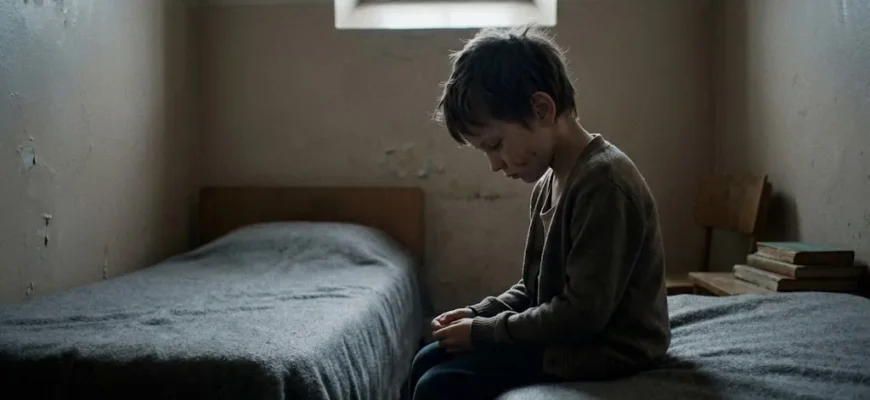
Today, conducting such experiments is completely out of the question. However, life sometimes creates terrifying scenarios, giving rise to the phenomenon of "Mowgli children." This term is used to describe feral children who grew up isolated from human society from an early age.
The reality of feral children is far from the romanticized fairy tale. They face irreversible psychological damage:
- ???? Oksana Malaya (Ukraine, 1990s): A girl abandoned by her parents on the street at age three lived with dogs for five years. When she was found, she was running on all fours, growling, and lapping up water with her tongue.
- 🔒 Genie (USA, 1970s): A tragic case occurred when a mentally ill father locked his daughter in a room in complete silence from infancy until age 13. After her rescue, Genie never fully mastered grammar, learned to chew solid food, or walk upright.
The Critical Period Hypothesis: Why Lost Time Can't Be Recovered? 🧠⏳
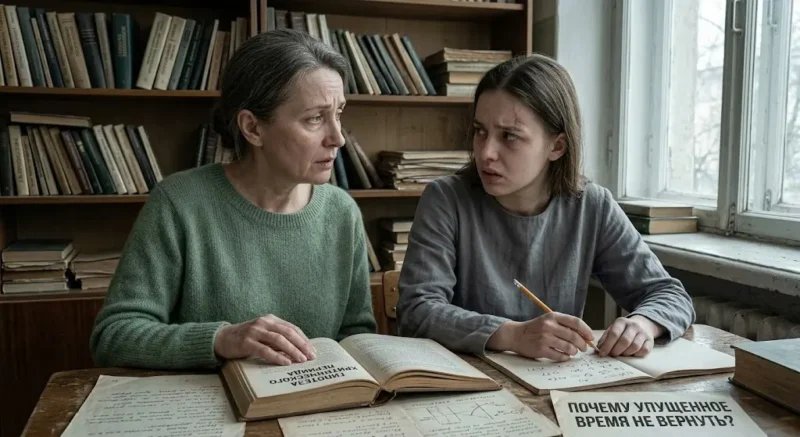
By studying Mowgli children, science has come to the most important conclusion: there is a special way to acquire language strict window of opportunity, called the "critical period."
The brain's ability to easily acquire language remains until about 5-7 years of age, but after the onset of puberty, this ability is closed almost forever 📉.
The brain is born with a huge surplus of neural connections, absorbing information like a sponge 🧽. If a child regularly hears speech, these neural pathways are strengthened. Without a language environment, unused connections die off due to lack of use (a process called "synaptic pruning" ✂️).
Why did babies die? The mystery of emotional hunger 💔
Let's return to the macabre aspect of Frederick II's experiment: why did the children die if they were fed?
In the 20th century, doctors encountered a frightening phenomenon: in good orphanages, infants were dying en masse. Medicine called this Failure to Thrive (inability to thrive), and psychoanalyst René Spitz coined the term hospitalism 🏥.
It turns out that a human baby needs not only food, but also emotional and tactile contact 🫂 (touching, hugging, eye contact, and voice).
From a biological point of view, attachment is physiological necessityAffection releases growth hormones and oxytocin, which stimulate development. In isolation, infants experience skyrocketing levels of the stress hormone cortisol 📈, which leads to suppressed immunity and stunted growth. Without interaction, children literally fade away.
Conclusion 📌
The historical experiments and fates of the "Mowgli children" reveal the deepest truth.
Language is not embedded in us as a ready-made program 💻. This is potential ability, which is activated only in the company of other people 🤝. We are social creatures, "programmed" for communication. Without communication and warm touch, we lose the very ability to live.
Human speech is the invisible umbilical cord that makes us human ❤️. And the cruel lesson of history is that silence can sometimes truly kill.