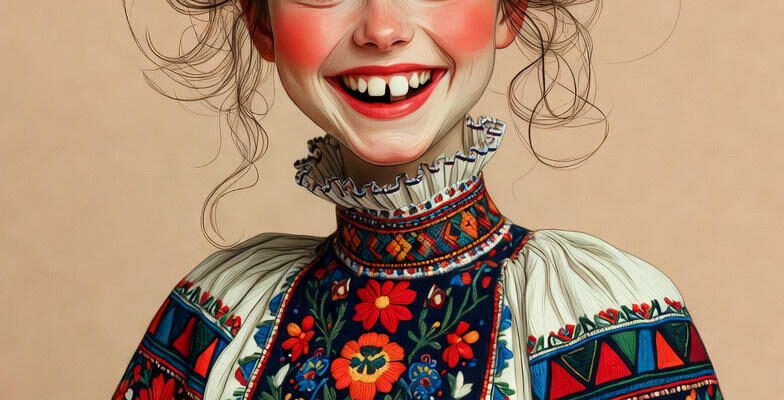
- Vyshyvanka: National Symbol or Fashion Absurdity?
- Vyshmvanka – from a home craft to a political gesture
- 2. Contemporary context: revival of tradition or its profanation?
- 3. Critical analysis: stupidity or conscious choice?
- 4. International perception: how is the vyshyvanka seen abroad?
- 5. An alternative view: when is embroidered shirt appropriate?
- 6. Conclusion: A balance between tradition and modernity
- Conclusion: Vyshyvanka in the 21st Century
Vyshyvanka: National Symbol or Fashion Absurdity?
Vyshmvanka – from a home craft to a political gesture
In recent years, we've witnessed a remarkable phenomenon: the traditional vyshyvanka, once a simple peasant garment, has transformed into a fashion accessory, worn in the most unexpected places —from school classrooms to diplomatic receptions. But what lies behind this trend—genuine national identity or ostentatious display?
1. Historical Roots: The Truth About the Origins of the Vyshyvanka
1.1 Utilitarian purpose, not an artistic masterpiece
Historically, embroidered shirts were made from coarse, hand-woven materials :
-
linen fabric
-
Hemp canvas
-
Simple homespun
It's important to understand : this was everyday workwear, not formal attire. The embroidery served a practical purpose—strengthening areas of greatest wear (collars, cuffs).
1.2. Production technology: template and repeatability
-
Ready-made stencils and patterns were used
-
There was a lack of uniqueness - patterns were repeated from generation to generation
-
The process of embroidery was not a creative , but a craft activity.
"On winter evenings, women embroidered not out of love for the art, but because it was the only available activity in their free time from field work."
2. Contemporary context: revival of tradition or its profanation?
2.1 Symbolic meaning in independent Ukraine
After independence, the vyshyvanka became:
-
Political symbol of national identity
-
A marker of belonging to a certain cultural group
-
An instrument of soft power in international relations
2.2 The paradox of modern use
Today we are witnessing cognitive dissonance :
-
Businessmen in embroidered shirts during business negotiations
-
Officials in national shirts at official events
-
Schoolchildren wearing embroidered shirts instead of school uniforms
Question : Is it appropriate to wear traditional peasant clothing in modern business and formal contexts?
3. Critical analysis: stupidity or conscious choice?
3.1. Arguments against the mass trend
❌ Loss of authenticity
-
Modern embroidered shirts are often made in China.
-
Synthetic materials are used instead of natural ones
-
Simplification and vulgarization of traditional ornaments
❌ Demonstrative limitation
Wearing an embroidered shirt in inappropriate contexts may indicate:
-
On the misunderstanding of the historical significance of clothing
-
On the desire to stand out without a deep understanding of traditions
-
On following fashion instead of genuine respect for culture
❌ Unproductive waste of time
-
Hand embroidery in the modern world is an inefficient use of time.
-
In the era of mass production, factory-made fabrics are more practical
-
Nostalgia for the past should not hinder progress.
3.2. Psychological portrait of a trend follower
| Media type | Motivation | Degree of awareness |
|---|---|---|
| Official | Demonstration of loyalty | Low, political expediency |
| Businessman | An attempt to look "popular" | Average, marketing calculation |
| Schoolboy | Following parent/teacher directions | Minimal, no choice |
| A patriotic citizen | A sincere belief in symbolism | High, but idealization is possible |
4. International perception: how is the vyshyvanka seen abroad?
4.1. Perception in EU countries
-
Exoticism and national color
-
A political symbol of Ukrainian identity
-
Sometimes - inappropriate pathos in business communication
4.2. Manufacturing in China: The Hidden Meaning
Chinese manufacturers perceive the demand for embroidered shirts as:
-
Commercial opportunity
-
Confirmation of the stereotype of "savages with a penchant for shiny things"
-
Lack of understanding of cultural context
"When a traditional symbol is produced in a country that does not understand its meaning, it loses its sacredness and becomes simply a commodity."
5. An alternative view: when is embroidered shirt appropriate?
✅ Cultural events
-
Folklore festivals
-
National holidays
-
Weddings and family celebrations
✅ Personal use
-
As home clothes
-
In the village, in nature
-
Like a family heirloom
✅ Educational context
-
History and culture lessons
-
Museum exhibitions
-
Scientific conferences on ethnography
6. Conclusion: A balance between tradition and modernity
What really matters?
-
Understanding , not blind adherence to traditions
-
Respect for history , not its commercialization
-
Relevance in a specific social context
Golden mean
-
Preserving traditions in authentic forms
-
Development of a modern interpretation of folk costume
-
Rejecting ostentatious patriotism in favor of a conscious cultural identity
Conclusion: Vyshyvanka in the 21st Century
The vyshyvanka is undergoing a complex transformation. From simple peasant clothing, it has evolved into a multifaceted symbol , the meaning of which depends on the context of its use.
The key question : Is the widespread wearing of embroidered shirts in inappropriate places a manifestation of national self-awareness or is it a superficial fashion based on a misunderstanding of the historical context?
The answer probably lies somewhere in between. But one thing is certain: true respect for traditions is demonstrated not by ostentatious wearing of national dress, but by a deep understanding and preservation of cultural heritage in its authentic forms.
Discussion questions for readers:
-
Do you think it is appropriate to wear embroidered shirts in a business environment?
-
Is the production of national symbols in other countries a profanation of traditions?
-
How to find a balance between preserving cultural heritage and the demands of modern times?
Buy a manual and improve your health
Note : This article is an analytical piece intended to stimulate discussion about the role of traditions in modern society.