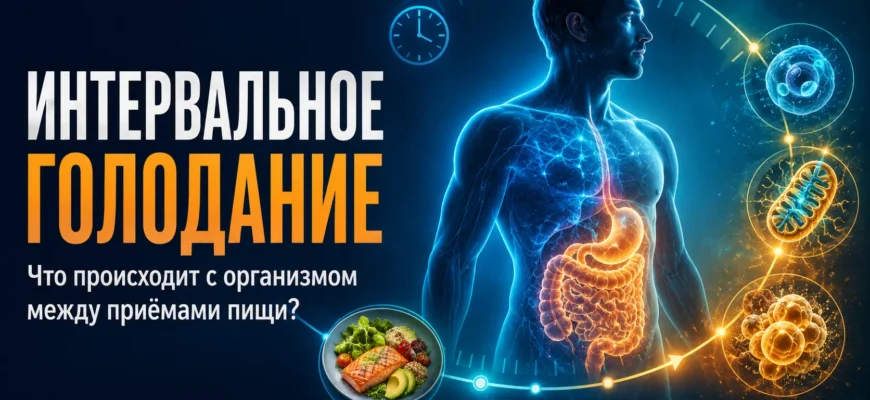
- Intermittent fasting: what happens to the body between meals?
- ⏳ The first hours after eating: the body receives energy
- 🔄 What changes when new food is not introduced?
- 🔥 Transition from glucose to fat stores
- 🧬 The Link Between Intermittent Fasting and Autophagy
- 🕐 Basic Intermittent Fasting Modes
- 🥗 Food quality remains paramount
- 💧 Intermittent fasting and water
- ✅ Potential benefits of intermittent fasting
- ⚠️ Possible side effects
- 🚫 Who might not benefit from intermittent fasting?
- 🌱 How to start most carefully?
- 🧠 The main thing is not the duration of hunger, but a sustainable lifestyle
- 🔎 Conclusion
Intermittent fasting: what happens to the body between meals?
🍽️ Modern people are used to eating almost continuously. Breakfast, coffee with sugar, a small snack, lunch, another snack, dinner, and something before bed. Even if the amount of food seems moderate, the body receives new doses of energy almost constantly. Read more on this page.
But the human body evolved in conditions where food wasn't always available. Periods of satiation naturally alternated with hours without food. It's during these periods that the body doesn't stop working—it simply switches to a different mode.
Intermittent fasting isn't a specific food choice or a short-term diet. It's a dietary pattern in which periods of eating alternate with relatively long periods without calories.
What happens during this time to insulin levels, glycogen stores, fat tissue, and cellular repair mechanisms? And is a few hours without food really beneficial to health?
⏳ The first hours after eating: the body receives energy
Digestion begins immediately after eating. Carbohydrates are broken down primarily into glucose, proteins into amino acids, and fats into fatty acids and other components.
Some of the incoming glucose is used by cells as an energy source. At the same time, insulin levels, a hormone that helps move glucose from the blood into cells, increase.
Excess glucose is temporarily stored in the liver and muscles as glycogen . If the energy intake is greater than the body can use or store as glycogen, some of the excess may be used to form fat reserves.
For several hours after eating, the body is primarily focused on the absorption and distribution of nutrients. This period is sometimes called the state of satiety.
Its duration depends on the composition and size of the portion. Foods containing protein, fat, and fiber usually take longer to digest than sweets or easily digestible carbohydrates.
🔄 What changes when new food is not introduced?
After some time, the digestion process gradually completes. Blood glucose levels drop, and insulin levels usually decrease along with them.
The body still requires energy: the heart continues to beat, the brain processes information, body temperature is maintained, muscles and internal organs work.
Therefore, the body begins to more actively use previously accumulated reserves. The liver breaks down glycogen and helps maintain the required blood glucose level.
This is a normal physiological process. The body doesn't enter a state of emergency just because a person hasn't eaten for several hours.
It's important to understand that the transition between energy sources occurs gradually. There's no universal point at which the body suddenly "switches on fat burning." The rate of change depends on age, body weight, physical activity, metabolic status, previous meals, and many other factors.
🔥 Transition from glucose to fat stores
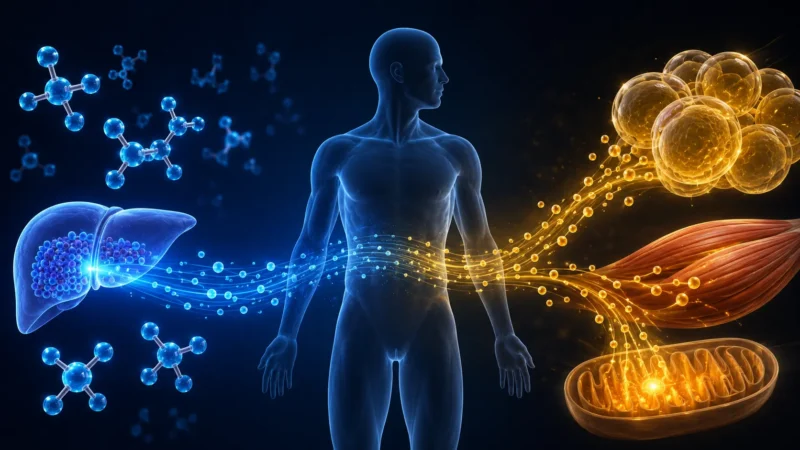 As available glycogen stores deplete, the body begins to utilize fatty acids more actively. Adipose tissue ceases to be solely an energy storage device and becomes one of its sources.
Ketone bodies can be formed from fatty acids in the liver . These can provide energy to various tissues, including the brain, when glucose availability decreases.
This metabolic transition is part of the body's natural ability to adapt to changing nutritional conditions. Scientists call this ability metabolic flexibility.
However, this doesn't mean that any prolonged fasting automatically leads to significant weight loss. Weight loss still depends on the total amount of energy consumed and expended, the quality of nutrition, physical activity, sleep, and overall health.
If, after a fasting period, a person overeats and compensates for all the missed calories, the desired result may not be achieved.
🧬 The Link Between Intermittent Fasting and Autophagy
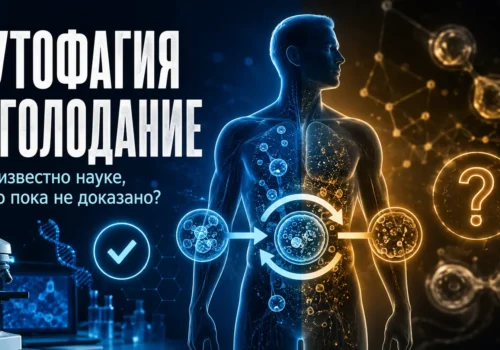
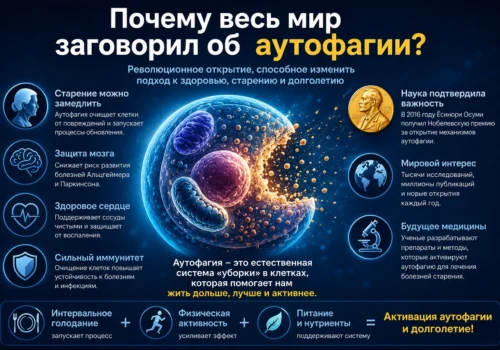
Of particular interest is the possible link between periods of food deprivation and autophagy , the natural process of breaking down and recycling damaged or unwanted cellular components.
Autophagy occurs constantly in the body, but its activity can be altered by nutrient deficiencies, physical activity, and other types of cellular stress.
When external energy supply is limited, cells strive to use available resources more efficiently. Damaged proteins and individual cellular structures can be broken down, and the resulting components can be reused.
Studies in cell cultures and animals show that dietary restriction can enhance autophagic processes. However, modern science is unable to determine the exact number of hours of fasting required to significantly activate autophagy in a given individual.
Popular claims that autophagy necessarily begins after 16, 18, or 24 hours are an oversimplification. This process is difficult to measure directly in humans, and animal studies cannot be automatically generalized to humans.
Therefore, intermittent fasting should not be perceived as a guaranteed way to “cleanse the body” or cure diseases.
🕐 Basic Intermittent Fasting Modes
There are several common options for intermittent fasting:
- 12:12 — 12 hours for eating and 12 hours without calories. For example, dinner at 19:00 PM and breakfast at 07:00 AM.
- 14:10 - 14 hours without food and a ten-hour eating window.
- 16:8 - eating for eight hours and 16 hours without calories.
- 5:2 - eating normally five days a week and significantly restricting calories on two separate days.
- Fasting every other day - alternation of normal and highly calorie-restricted days.
For most beginners, the 12:12 regimen is the most lenient option . Sometimes this can be achieved by eliminating late-evening snacks and not eating dinner until night.
A longer period without food doesn't necessarily mean greater benefits. The more restrictive the regime, the higher the risk of weakness, overeating, headaches, nutrient deficiencies, and rejection of the chosen system.
🥗 Food quality remains paramount
Intermittent fasting doesn't turn unhealthy foods into healthy ones. If your eating window is filled with sweets, processed foods, excess salt, and saturated fat, a meal schedule alone won't eliminate the potential harm.
It is advisable to maintain the following as the basis of your diet:
- vegetables and greens;
- legumes and whole grains;
- sufficient amount of protein;
- nuts and seeds;
- sources of unsaturated fats;
- moderate amounts of fruit;
- adequate fluid intake.
Getting enough protein is especially important for older adults. The risk of muscle loss increases with age, so restricting your diet too much can do more harm than good.
Thus, the question “what do we eat?” is no less important than the question “when do we eat? ”
💧 Intermittent fasting and water
Regular intermittent fasting does not require abstaining from liquids. Water is usually allowed during the fasting period. Some people also drink unsweetened tea or coffee without sugar, milk, or other caloric additives.
Dry fasting , in which a person abstains from both food and water, should not be considered a standard form of intermittent fasting. It increases the risk of dehydration, electrolyte imbalance, low blood pressure, and kidney problems.
Prolonged dehydration is especially dangerous in hot weather, during physical activity, with kidney disease, heart disease, metabolic disorders, and when taking certain medications.
✅ Potential benefits of intermittent fasting
Research shows that for some people, intermittent fasting may help:
- weight loss;
- reducing the number of late-night snacks;
- improving insulin sensitivity;
- moderate improvement in glucose and cholesterol levels;
- a more organized diet;
- reducing the overall caloric content of the diet.
However, research results are mixed. In some cases, intermittent fasting appears no more effective than regular moderate calorie restriction.
Furthermore, most studies are of limited duration. Therefore, it is not yet possible to confidently state that intermittent fasting alone prolongs life or prevents certain diseases.
⚠️ Possible side effects
In the first days of changing the regime, some people experience:
- feeling of intense hunger;
- weakness or dizziness;
- headache;
- irritability;
- reduced concentration;
- sleep disorders;
- constipation;
- a tendency to overeat after the end of a fasting period.
If symptoms are severe or persist for a long time, the experiment should be stopped and the situation discussed with a doctor.
🚫 Who might not benefit from intermittent fasting?
It is not recommended to start intermittent fasting on your own:
- children and teenagers;
- pregnant and lactating women;
- people with eating disorders;
- in case of insufficient body weight;
- in diabetes and the use of hypoglycemic drugs;
- in case of kidney, liver or heart diseases;
- if you are prone to hypoglycemia and fainting;
- elderly people with severe weakness or loss of muscle mass;
- people taking medications that must be taken with food.
Having a chronic illness doesn't always mean an absolute ban. However, dietary changes in such cases should be made after consultation with a qualified specialist.
🌱 How to start most carefully?
To get started with intermittent fasting, you don't have to skip breakfast or go a whole day without food.
A more reasonable approach might look like this:
- finish dinner a few hours before bed;
- avoid nighttime snacking;
- start with 12:12 mode;
- maintain adequate water intake;
- do not overeat during the eating window;
- monitor your well-being, sleep and energy levels;
- Do not combine fasting with excessive physical activity.
If the gentle regimen is well tolerated, the eating interval can be adjusted gradually. The body usually needs time to adapt.
🧠 The main thing is not the duration of hunger, but a sustainable lifestyle
Intermittent fasting can be a convenient tool, but it's not a one-size-fits-all solution. Some people find it easier to skip late dinners, while others prefer eating small meals several times a day.
It's not just the hours without food that matter for your health. Equally important are a balanced diet, physical activity, maintaining muscle mass, quality sleep, emotional well-being, and regular medical monitoring.
If the chosen regimen causes constant weakness, anxiety, overeating, or worsens the quality of life, it is better to abandon it.
🔎 Conclusion
The body doesn't remain idle between meals. As insulin levels decline, it gradually switches from utilizing incoming glucose to storing glycogen and fatty acids. Simultaneously, the activity of cellular mechanisms associated with maintaining energy balance and processing damaged components changes.
Intermittent fasting may help some people organize their eating habits, reduce snacking, and improve certain metabolic parameters. However, its long-term impact on human lifespan remains poorly understood.
The sensible goal is not to fast as long as possible, but to find a safe and sustainable eating pattern that maintains health and does not destroy quality of life.
This material is for informational purposes only and does not replace a doctor's consultation. Before beginning a fast, especially if you have a chronic illness or are taking medications, you should consult with a qualified healthcare professional.
"`