Critical Questions and Answers on the Topic: "Project for the Creation of a Society of Equal Starting Opportunities"
Friends, your participation in surveys is a corrector and a beacon for our activities. Help us set the course!
1. Abolition of inheritance and human motivation
📊 QUESTIONNAIRE: Your Position in the Face of Change
An honest look at these questions will help you understand if you are ready for the future?
What do you think is the best motivation for great achievements?
The desire to provide their children with capital and real estate
100 %
The desire to leave a mark on history, science or culture
0%
Searching for answers to eternal questions about life, death and the development of the soul.
0%
Fear of poverty and the struggle for physical survival.
0%
Critical question:
The answer to the question
If the right to private inheritance were abolished, wouldn't people's natural motivation to work, start a business, take risks, and achieve success disappear? After all, the desire to "provide for one's children" has been a powerful incentive for human development.
Answer:
Shift in values
We do not condemn the pursuit of material well-being; on the contrary, we consider it natural and worthy of respect. But we are against the transfer of accumulated wealth by inheritance, because mental and physical abilities are not passed on along with capital. The son of a world chess champion is not obliged to defend the crown if his calling is to treat animals. So why should the children of those who often made their fortunes through dubious means inherit not only the factories and plants, but also the fates of the people who worked in them?
We propose shifting the focus of motivation from the accumulation of material wealth to the creation of spiritual and cultural values—toward contributing to the overall development of humanity. The true reward is not possessions, but the mark a person leaves on the world: ideas, discoveries, and good deeds.
The possibility of life after death may also be a motivation. Humanity doesn't fully understand what happens to consciousness after physical death. There are thousands of testimonies of people recalling past lives down to the smallest detail. This isn't proof of reincarnation, but it would be unwise to ignore this phenomenon.
We suggest we move away from rabid materialism and tell people the truth! And the truth is that
We don't know if there is life after death!
The Bible says that man was created "in the image and likeness of God." But if the Creator is the highest spiritual being, manifesting through energy, intelligence, and harmony, then man is more than just a biological shell. Yes, the physical body is mortal—it is matter that returns to the earth—but numerous ancient sources speak of the existence of subtle bodies and the further evolution of consciousness.
Questionnaire: How do you feel about the idea of education in high-tech boarding schools (like Eton or Harrow), but accessible to every child?
Positive: this is the only way to guarantee a truly equal start and quality education.
100 %
I fear a breakdown in the emotional connection between parents and children.
0%
I believe that this will strengthen the family, freeing parents for creativity and self-realization.
0%
Higher motivations
If this is true, then the meaning of life extends beyond material accumulation—a person lives not for the sake of possessions, but for the development of the soul, experience, creativity, and self-improvement. Thus, refusing an inheritance doesn't kill motivation; on the contrary, it elevates it to a higher, spiritual level. Wealth often doesn't bring happiness. Many children of rich and famous families have died prematurely due to depression, drug addiction, excess weight, physical inactivity, suffering from incurable chronic diseases, and so on. People say, "The rich also cry," and also, "You can't take wealth to the grave." The all-consuming desire for cars, yachts, cell phones, and likes on social media kills critical thinking and acts like pheromones, forcing ants to run in circles until they become completely exhausted and die a senseless death!
2. The Solidarity Fund of the Future and the Danger of Dependency
Critical question:
The answer to the question
Could a system of equal tranches generate social passivity and dependence on the state, turning active citizens into consumers of a “guaranteed start”?
Answer:
We see the fund not as a handout, but as a tool for restoring justice. The goal is not to "make everyone equal," but to give everyone the opportunity to start a life free of debt, fear, and inequality. To avoid dependency, the fund must be linked to a system of responsibility—development, education, and social engagement. It is not a "gift," but "admission to an equal starting point." A system of tranches at key stages of life encourages movement and development, not passivity.
Do you believe that AI can be a fairer judge than humans?
Yes, AI is free from the greed, nepotism, and fear that prevent humans from making honest decisions.
100 %
Only if AI algorithms are open and verifiable by society.
0%
No, no machine can replace human compassion and intuition.
0%
3. Boarding schools and the fate of the family
Critical question:
Answer to the question.
If the upbringing of children is handed over to AI-controlled boarding schools, will the human warmth, individuality, and spiritual continuity that family provides disappear?
Answer:
We emphasize that families often perpetuate social inequality and traumatic scenarios, while boarding schools with AI mentors can ensure the same quality of upbringing for everyone. However, the love, care, and personal example of parents cannot be completely replaced. Without an emotional connection and spiritual experience within the family, there is a risk of raising "perfectly raised" but spiritually lonely individuals. Harmony is only possible when technology enhances humanity, not replaces it.
Emancipation of children
In many countries, children aged 17 or 18 are emancipated and begin to earn their own living, regardless of their parents' well-being. If the state assumes a significant share of childcare, this will strengthen, rather than destroy, the family institution. Parents will have more time for creative development and self-realization, as well as the confidence that their children are professionally supported and receiving a quality education. The realization of this security and freedom from everyday worries can spark new waves of love and gratitude between parents and children. Children who are frequently separated begin to value their parents even more—the institution of family does not disappear, but rather reaches a new level of maturity and awareness.
Negative associations with Soviet orphanages
It's important to cast aside the negative associations with Soviet orphanages and boarding schools, where an atmosphere of alienation and domestic strictness reigned. Modern boarding schools, especially with the help of AI, can become centers of personal development, freedom, and inspiration.
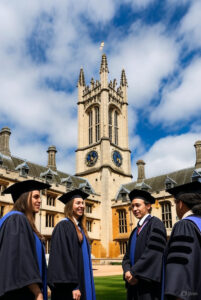
An example is British boarding schools, which have been shaping society's elite for hundreds of years. Many British prime ministers attended such schools:
Famous people who graduated from boarding schools
Eton has produced 19 Prime Ministers.
Harrow - 7 Prime Ministers, including Winston Churchill,
Westminster School - 6 Prime Ministers.
A.S. Pushkin, A.I. Turgenev, and M.V. Lomonosov also graduated from boarding schools. The list of famous people who graduated from boarding schools is endless.
I'll name ten more:
George W. Bush is the 43rd President of the United States. He is a graduate of Phillips Academy (known as Andover). Tuition is $73,780 per year.).
Donald Trump, the 45th President of the United States, attended the New York Military Academy. Annual tuition (boarding) is approximately $57,000.
New York Military Academy
Benedict Cumberbatch is a famous British actor (Sherlock, Doctor Strange). He studied at Harrow School.
Hugh Laurie is a British actor and musician, best known for his role as Dr. House. He studied at Eton College. Tuition at Harrow School in the UK for the 2025/2026 academic year is £21,245 per term.
Mark Zuckerberg, founder of Facebook, is a graduate of Phillips Academy. The estimated cost is $76,731 per year for boarding students and $59,478 per year.
Lana Del Rey (real name Elizabeth Grant) is an American singer and songwriter. She attended Kent School.
John F. Kennedy, the 35th President of the United States, attended Choate Rosemary Hall, the same school as Michael Douglas. Tuition for the 2025-2026 school year is $71,420 for boarding and $54,990 for day tuition.
Lana Del Rey (real name Elizabeth Grant) is an American singer and songwriter. She studied at Kent School. Tuition starts from £12,926 per term.
Coco Chanel became an orphan at an early age. She and her sisters were first raised by relatives and later placed in an orphanage. But this didn't stop her from overcoming numerous difficulties and becoming a strong and truly great woman.
The learning process in these schools starts from the age of 3-12 years.
By the way, the lowest cost of tuition in elite boarding schools in France is about $26,000–$27,000 per year.
This means that the cost of tuition is quite comparable to the fees and bribes parents pay to send their children to prestigious educational institutions in major Russian cities. In Moscow, these figures are much higher.
Famous people who were educated in Soviet boarding schools
Incidentally, many famous people also grew up in those terrible Soviet boarding schools. Here are some of their names:
Roman Abramovich "A man without a past"—that's what they call one of the most influential and wealthiest people in our country. Roman Abramovich was born into a simple working-class family. His mother died when he was one year old, and his father died a few years later. After these terrible events, Roman ended up in an orphanage. Stanislav Sadalsky, who, after the death of his mother, ended up in Voronezh Boarding School No. 2. It was there that he first appeared on stage in the school drama club, which subsequently determined his fate.
Soviet theater and film actress Nina Ruslanova was raised in a boarding school. As a little girl, she was raised in five orphanages. The film star still doesn't know her biological parents.
Yuri Shatunov , the legendary lead singer of the band "Laskoviy May ," spent his childhood in Orenburg boarding school No. 2, where he began to take his first steps toward a musical career.
Actor Danil Steklov , grandson of the famous actor Vladimir Steklov and son of actress Agrippina Steklova, lived in a boarding school until the seventh grade—his parents were often on set, and this became a normal way of life for the boy.
An outstanding circus artist and specialist in therapeutic gymnastics Valentin Dikul was also raised in an orphanage. Was no exception Nikolay Gubenko — an actor, director, and politician who spent his childhood in a boarding school. He also spent his childhood in a boarding school. Vladimir Presnyakov и Ani Lorak. It's simply impossible to list all the famous and remarkable people who received their education in Soviet boarding schools.
These data demonstrate that boarding school education may not be a sign of alienation, but rather a sign of a higher level of development of society, where upbringing and education become matters of national importance.
4. Artificial intelligence as an arbiter of justice
Is it possible to create an artificial intelligence that is truly impartial, rather than reflecting the biases of its creators? Could a hybrid AI-enabled system become a new form of covert control?
Answer: to the critical question
AI is the collective intelligence of humanity
We believe that AI has the potential to become more than just a tool, but a new form of collective intelligence, similar to that which governs the behavior of anthills, termite mounds, beehives, wolf packs, and lion prides. Unlike insects, humans are the only thinking creatures, and therefore, unlike anthills and termite mounds, the self-organization of society will evolve, as will human technological advances! In nature, collective intelligence serves the preservation of the species—it ensures a balance between individual and collective interests. Similarly, AI is destined to become the integrator of human society, coordinating decisions not for the benefit of individual groups, but for the stability and harmony of the whole.
AI, unlike humans, is constant and consistent.
He is incapable of betraying the interests of society for the sake of personal ambition, does not seek material gain—either for himself or his loved ones—and is not susceptible to external influences—temptations, fear, or manipulation. His decisions can be rational and consistent where others are prone to emotion, self-interest, or dependence on the opinions of others.
Questionnaire: If inheritance were abolished tomorrow, but every young person was given a large starting tranche, how would this change your attitude towards work?
I would work even harder knowing that everything depends only on my talent.
100 %
I would relax and become a dependent, living on government benefits.
0%
I would relax and become a dependent, living on government benefits.
0%
I would switch from accumulating things to developing my abilities and traveling.
0%
Properties of AI
The time has come to develop AI not only as a technical tool but also as an evolutionary partner for humanity, capable of assisting in solving not only engineering but also ethical, social, and governmental problems. However, critics rightly point out that until humans learn to live by the laws of reason, they risk making AI a reflection of their own mistakes. Therefore, it is important that AI not replace human consciousness, but rather expand its boundaries and purify its motives.
God made a man from clay and asked the man, "What should I make with the remaining piece?" The man said, "Happiness." God replied, "Mold it yourself." So, the clay is a newborn child, free of sins, free of both good and bad thoughts. And by "person" is meant not only the child's parents, but the entire human race. Because in isolation, without the surrounding society, parents cannot give their child anything at all.
5. Utopia and the real nature of man
Critical question:
Can a society without inheritance, inequality and personal privileges exist sustainably if human nature itself is selfish and seeks advantage?
Answer:
A smart approach to human vices
We answer: human vices don't need to be eradicated by force—they can be rendered meaningless. For example, corruption disappears when wealth isn't inherited; envy loses its power when success doesn't confer power over others. However, history shows that utopias collapse not because of laws, but because of human psychology. If society deprives people of the right to be unique, it suppresses what makes them individuals. True equality is equality of starting opportunities, not identical destinies.
6. Ethical question: who determines what “happiness” is?
Critical question:
Can society centrally decide what a person’s “happiness” should be?
Answer:
everyone has their own happiness
Happiness is in the harmony of personality
We define happiness as the harmony between the individual and society. But happiness is a subjective category. For one, it's creativity, for another, family, for a third, the path to God. If the state or AI begin to impose a model of "true happiness," even the best ideas can turn into a form of spiritual coercion. True happiness is a free choice, supported by awareness, not an algorithm or a rule.
Сonclusion
The concept of a "Society of Equal Starting Opportunities" is an attempt not simply to reform the social system, but to rethink the very nature of motivation and meaning in human life. Material incentives can be replaced by spiritual ones—the desire for development, truth, and perhaps even understanding the mystery of life and death. As long as a person does not know what awaits them beyond this earthly existence, the search for happiness is not simply a social project, but a path to self-discovery.
For those who want to explore the historical precedents and philosophical justifications for equality of opportunity and collective wisdom:
Plato's "Republic ." The original source of the idea that raising children should be a community matter, so that everyone would find a place according to their talents, not their birth.
Winston Churchill's "My Early Years ." A memoir by a Harrow alumnus that will help you understand how the harsh boarding school system shapes the character of a leader.
Ray Kurzweil's "The Singularity Is Near ." A futurological forecast about how AI will become our evolutionary partner in solving global social problems.
Viktor Frankl's "Man's Search for Meaning ." A book that supports your thesis that the highest human motivation is not materialism, but meaning.
Thomas Piketty's "Capital in the Twenty-First Century ." A scientific explanation of why inheritance in the modern world works against economic development and justice.
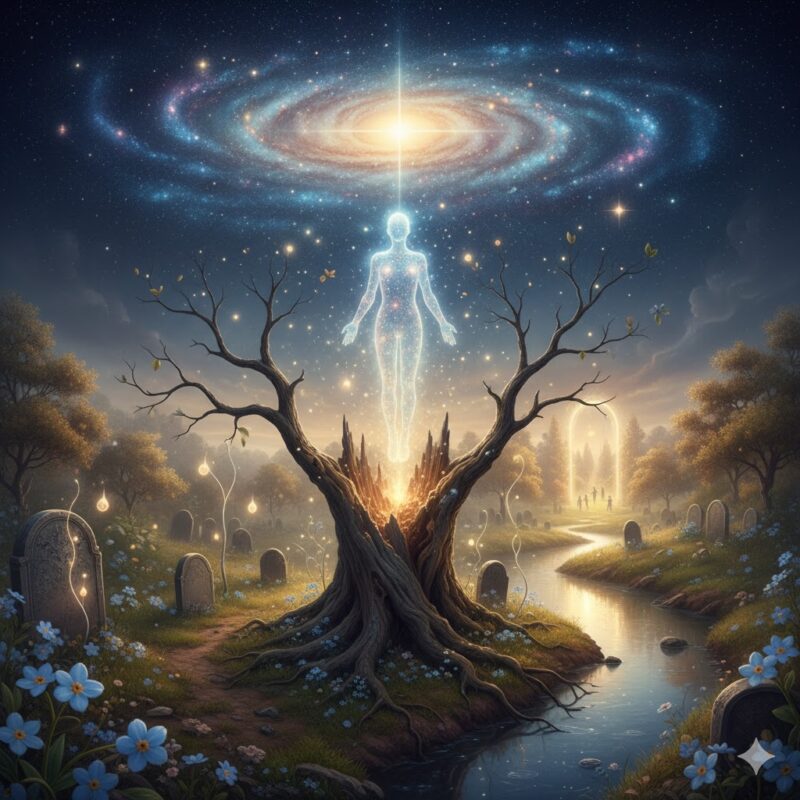 The Bible says that man was created "in the image and likeness of God." But if the Creator is the highest spiritual being, manifesting through energy, intelligence, and harmony, then man is more than just a biological shell. Yes, the physical body is mortal—it is matter that returns to the earth—but numerous ancient sources speak of the existence of subtle bodies and the further evolution of consciousness.
Critical question:
 Critical question:
 Critical question:
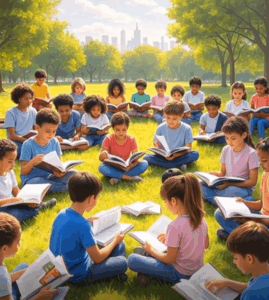 We emphasize that families often perpetuate social inequality and traumatic scenarios, while boarding schools with AI mentors can ensure the same quality of upbringing for everyone. However, the love, care, and personal example of parents cannot be completely replaced. Without an emotional connection and spiritual experience within the family, there is a risk of raising "perfectly raised" but spiritually lonely individuals. Harmony is only possible when technology enhances humanity, not replaces it.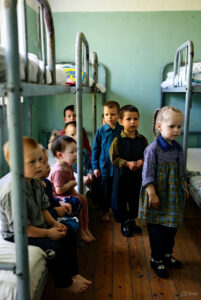
 George W. Bush is the 43rd President of the United States. He is a graduate of Phillips Academy (known as Andover). Tuition is $73,780 per year.).
 Critical question:
 Answer:
 Сonclusion