- Strelkov and the outbreak of war: geopolitical trap or inevitability? An author's perspective on the events of 2014
- Why do the events of 2014 continue to impact the world?
- Crimea: A Strategic Victory or the Beginning of a Big Problem?
- Author's hypothesis: "Trojan horse"
- 🏰 Crimea is a Trojan horse
- 💔 Russia and the "falling in love" with Crimea
- Why did the conflict quickly spread to Donbass?
- Strelkov: hero, volunteer, or historical accident?
- Information warfare has proven to be no less important than military warfare.
- Why did the sanctions become so widespread?
- Geopolitics of the 21st century has changed
- Could this development of events have been avoided?
- What does the experience of recent years show?
- Author's conclusion
- F.A.Q.
- 💬 Question for readers
Strelkov and the outbreak of war: geopolitical trap or inevitability? An author's perspective on the events of 2014
📅 Published: 2026
⏱ Reading time: 10 minutes
Important: This article represents the author's analysis of the causes and consequences of the events of 2014. Some conclusions are the author's interpretation and do not represent the sole generally accepted viewpoint.
Why do the events of 2014 continue to impact the world?
More than a decade has passed since the start of the Ukrainian crisis, yet its consequences continue to shape global politics, economics, and security. Millions of people are asking questions:
- Why did the conflict become so large-scale?
- Could the war have been avoided?
- Who received the greatest political dividends?
- What role did Crimea and Igor Strelkov (Girkin) play?
Most publications view these events as a series of isolated episodes. However, another viewpoint exists: what transpired could have been part of a much more complex geopolitical process, in which each event became an element of a long-term strategy.
It is this version that we will consider next.
Crimea: A Strategic Victory or the Beginning of a Big Problem?
In the spring of 2014, Russia established control over Crimea with virtually no use of military force.
For millions of Russians, this symbolized the restoration of historical justice. However, within a few months, it became clear that with the peninsula, Russia had gained not only territory but also a whole host of international consequences:
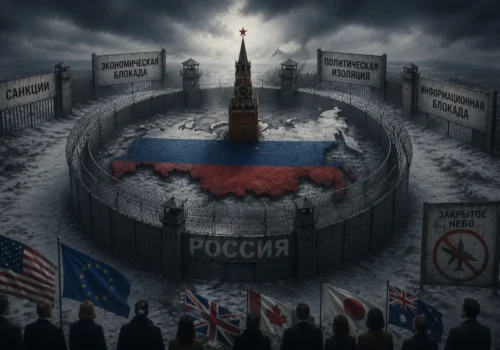
- economic sanctions;
- political isolation;
- deterioration of relations with the West;
- long-term conflict with Ukraine.
The question arises:
Were these consequences a coincidence or could they have been foreseen in advance?
According to the author's version under consideration, it was the international consequences that became the main result of what happened.
Author's hypothesis: "Trojan horse"
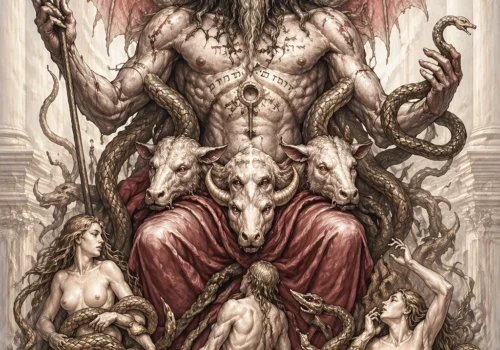
🏰 Crimea is a Trojan horse
Crimea is a Trojan horse. Forcing Russia to remove its military bases from the peninsula is impossible. For Russia, Crimea is not just a red line, but a bloody, crimson border. Placing NATO bases in Crimea is impossible without the threat of a nuclear conflict, so special attention was paid to "beautiful gift wrapping": preventing bloody clashes, but exposing Russia's aggressive policies to the world, making it a pariah, and triggering destructive processes within the country. The plan worked 100%. Go to the main page
In an ancient Greek legend, the inhabitants of Troy voluntarily allowed a wooden horse into the city, with warriors hiding inside.
In a figurative sense, a "Trojan horse" is a gift that carries a hidden threat.
The author proposes to consider Crimea as precisely such a geopolitical construct.
From this point of view, the main goal was not the territory itself, but a long-term change in Russia’s international position.
| Possible target | Possible outcome |
|---|---|
| Eliminate the possibility of NATO bases appearing in Crimea without direct confrontation | Maintaining a high level of tension |
| Create conditions for international pressure | Enhance sanctions |
| Changing the perception of Russia | Growing diplomatic isolation |
This interpretation remains a subject of debate, but it allows us to take a fresh look at subsequent events.
💔 Russia and the "falling in love" with Crimea
While Russia was "lip-smacking" the Crimea it had been given, movements rejecting the unconstitutional coup in Ukraine (2014) were springing up chaotically throughout the southeast and were brutally suppressed everywhere. Russia, meanwhile, offered no support to the resistance—it was absorbed by Crimea, naively believing it had brilliantly returned it to its shores. In reality, Crimea is a Trojan horse, and the territories created by Strelkov, as an appendage to this "horse," were created to foster a perception of Russia as a pariah.
You can support the blog author here
Why did the conflict quickly spread to Donbass?
Following the change of power in Kyiv, protest sentiments arose in many regions of southeastern Ukraine.
However, it was the events in the Donetsk region that saw the greatest development.
The key figure in the early stage of the armed confrontation was Igor Strelkov (Girkin).
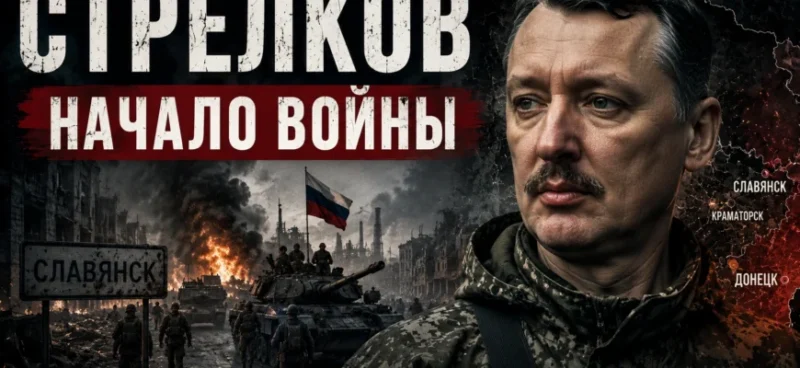
His unit occupied Slavyansk, after which the conflict entered an armed phase.
It was from this moment that the information picture of what was happening changed dramatically.
If before this the world media mainly discussed Crimea, now the main topic has become the war.
Strelkov: hero, volunteer, or historical accident?
Igor Strelkov remains one of the most discussed figures in the events of 2014.
There are various assessments of his activities.
Some see him as a man who sincerely tried to protect the Russian-speaking population of Donbass.
Others believe that it was his actions that became the catalyst for a large-scale armed conflict.
There are still ongoing debates about the degree of independence of his decisions.
There is no documented single answer to this question.
Therefore, any conclusions should be considered as versions, and not as a definitively established fact.
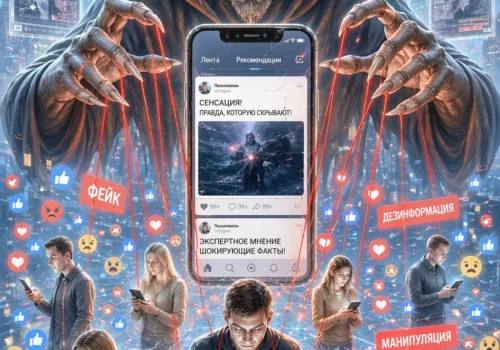
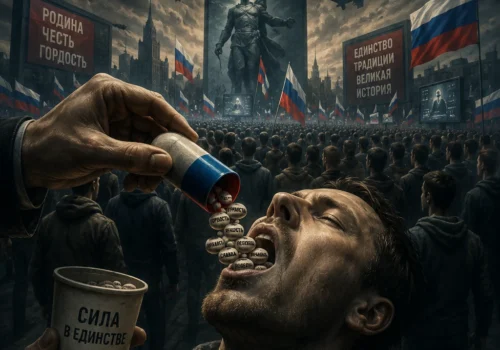
Information warfare has proven to be no less important than military warfare.
Modern conflicts are not won only on the battlefield.
Public opinion is becoming no less important.
Since the outbreak of hostilities in Donbass, Russia's image in Western media has changed dramatically.
It was the information component of the conflict that became one of the main factors of subsequent pressure.
It can be said that the struggle was waged simultaneously on several levels:
- diplomatic;
- economic;
- informational;
- military.
And each new episode strengthened the previous one.
Why did the sanctions become so widespread?
Before 2014, Russia had already faced international criticism.
However, it was after the events in Ukraine that the sanctions policy took on an unprecedented scale.
The consequences affected:
- banking sector;
- industry;
- high technology;
- aviation;
- energy;
- international investments.
From the author's point of view, it was precisely this reaction that became one of the main results of the entire geopolitical combination.
Geopolitics of the 21st century has changed
Events around Ukraine have changed not only relations between Russia and the West.
They have influenced almost the entire world order.
Changed:
🌍 energy markets;
💰 International trade;
🛰 military alliances;
⚖ balance of power between the largest states.
Defense budgets have risen sharply in many countries, and NATO has begun an accelerated expansion of its military infrastructure.
Could this development of events have been avoided?
There is no unequivocal answer.
History rarely develops according to a pre-written script.
However, most researchers agree on one thing:
Every political decision taken limits the number of possible options in the future.
Therefore, even small events can change the course of world history.
What does the experience of recent years show?
The conflict demonstrated several important patterns.
✅ Military victories do not always mean political victories.
✅ The information space is becoming an independent battlefield.
✅ Sanctions can have a long-term impact on the economy.
✅ The international reputation of a state becomes a strategic resource.
Author's conclusion
If we consider the events of 2014 as a single geopolitical process, it becomes clear that the struggle was not only for territory.
No less important was the struggle for international perception, influence on public opinion and change in the global balance of power.
Regardless of the reader's point of view, history shows that the consequences of political decisions can determine the fate of states for many decades.
This is why studying the causes and mechanisms of the Ukrainian conflict remains relevant not only for historians, but also for anyone trying to understand the modern world.
F.A.Q.
What is meant by the term "bloody logistics"?
In this article, the term is used as an author's concept to describe a sequence of political, informational, and military events that, in the author's view, mutually reinforced each other and led to an escalation of the conflict.
Why is Crimea compared to a "Trojan horse"?
This figurative comparison reflects the author's hypothesis that short-term success could be accompanied by long-term political and economic consequences.
What is the role of Igor Strelkov?
Igor Strelkov is considered one of the key figures in the initial stages of the armed conflict in Donbas. However, assessments of his role vary significantly and remain the subject of public and academic debate.
💬 Question for readers
What factors do you think have had the greatest influence on the development of the conflict since 2014?
- political decisions;
- information war;
- international confrontation;
- internal processes in Russia and Ukraine;
- or a combination of all these factors?
Share your opinion in the comments. Constructive discussion helps us better understand complex historical processes.