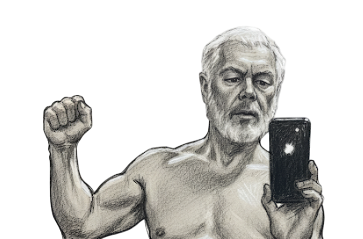
- About me. My life
- Is it possible to live a difficult life and still maintain faith?
- The Soviet village and double standards
- Youth, the City, and the Alcohol Trap
- Business, big money and hard lessons
- My life. Falls that could have broken me.
- Then I became friends with dry hunger
- Why didn't I become embittered?
- The main idea of my life
- Love that became a support
- The main idea: the old computer and this blog
- Why am I doing all this?
- Support us
- What is this page about?
About me. My life
 Hello. My name is Vlad. I'm 69 years old. I was born in the Russian hinterland and have lived through poverty, mistakes, losses, business, lawsuits, and a fire—but I've retained what matters most: faith in humanity and in creating a society with equal starting opportunities.
Is it possible to live a difficult life and still maintain faith?
I was born in May 1957 in a remote Russian village. My childhood was spent in conditions that many today find difficult to imagine.
We lived poorly. Very poorly. We skimped on everything: heat, food, and pet food. When there was nothing left to save, my parents and I would walk three kilometers through the forest at night to the collective farm's haystacks to steal straw and feed the cow—our breadwinner.
And in the spring, these stacks of straw were simply burned. Even then, the question arose in me: why is life so strange and unfair?
The Soviet village and double standards
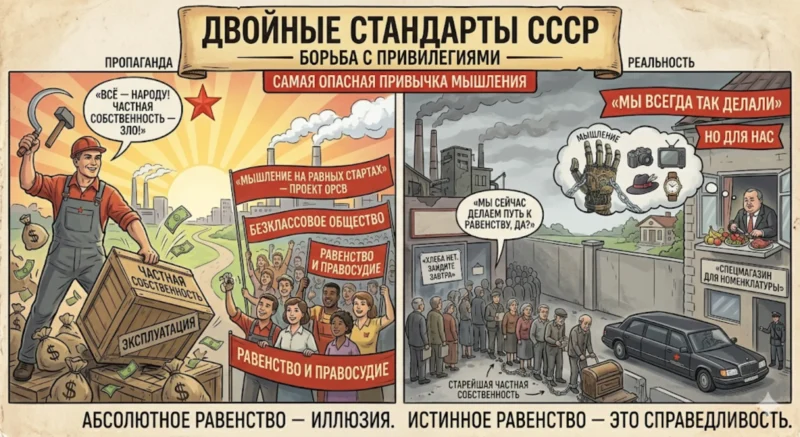
Since childhood, I've observed the contradictions of Soviet society. On the one hand, we were told about savings, duty, and a bright future. On the other, real life was hard, harsh, and often hypocritical.
Youth, the City, and the Alcohol Trap
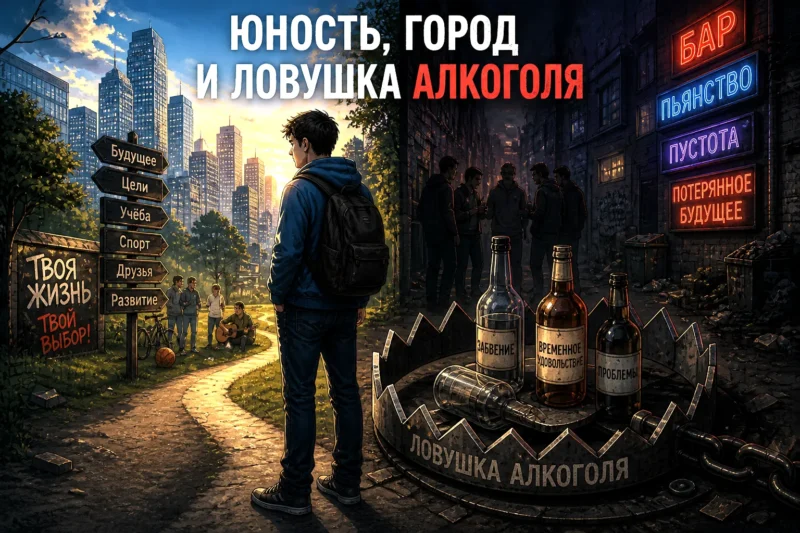
Life in the village was hard and joyless. Almost all teenagers gravitated toward the city: they enrolled in vocational schools, technical colleges, and institutes, all to escape rural poverty.
In 1974, I entered a technical university. There, I found myself caught in the throes of the times—the alcohol craze. Back then, they used to say, "Only a telegraph pole doesn't drink."
At first, I didn't realize that alcohol was destroying me and the people around me. The realization came later, when the noose had already been tightened quite tightly.
I didn't become an alcoholic in the usual sense of the word, but I became a bitter drunkard: I drank from pain, from failures, from the desire to run away from problems instead of solving them.
It was my first serious setback in life. And it took me decades to overcome it.
Business, big money and hard lessons
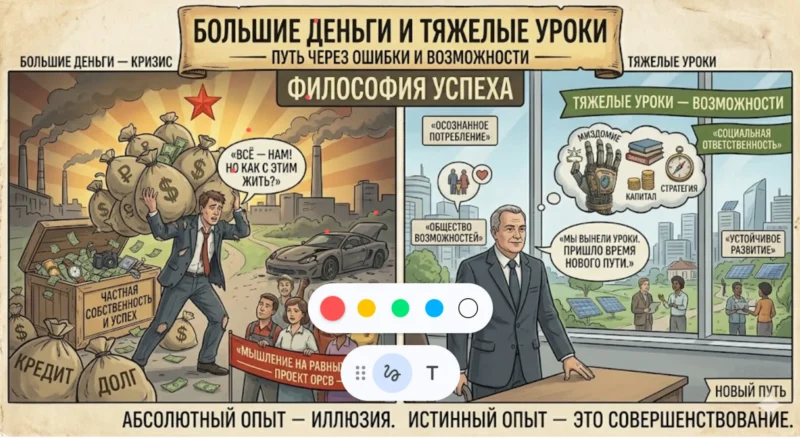
After graduating, I worked in my field for a short time. Then a time of change came, and with the onset of the Gorbachev era, I went into business without hesitation.
My path in business is a survival guide. It was as if fate teased me with big money and then immediately took it back, as if saving my soul, and sometimes even my life. In 1994, I fled from gangsters to Ukraine. But where you live doesn't determine your fate. Soon, my friction with the gangsters continued in my new place of residence.
Today, looking at me—a man with a Social Security pension of about $60, living in a house with a concrete floor, unplastered walls and a leaky roof—it’s hard to believe that I once carried briefcases full of money and managed a staff of 50 doctors for ten years.
My life has become a series of paradoxical catastrophes and miraculous rescues.
My life. Falls that could have broken me.
There have been trials in my life that are difficult to recall. There were superprofits and being held captive by bandits. I spent 30 days in a basement. There was an illegal prosecution that lasted seven years and included 137 court hearings. I was forced to fast many times. And then I became friends with hunger. Several times, to preserve my health, I fasted for 30 days on water.
Then I became friends with dry hunger
In 2024, I completed my first 100-day dry fasting course. This involves fasting for 36 hours for the first twenty days, followed by 12 hours of eating and drinking. The next 20 days are spent fasting for 60 hours, followed by 36 hours of eating. The next 20 days are spent fasting for 84 hours, followed by 70 hours of eating. The next 20 days are spent fasting for 108 hours, followed by 84 hours of eating. And the last 20 days of the 100 are spent fasting for 132 hours, followed by 108 hours of rest.
Honestly, this experiment requires very little willpower. The entire process is surprisingly comfortable. Water fasting is much more difficult and challenging. I repeated it in 2025. It's a very powerful system for healing and rejuvenating the body. You just need some preparation before entering and exiting the fasting days.
In 2017, my house burned down. Along with it, went my money, documents, and much of what kept me going.
It broke me. But not for long.
Today I understand: life didn't just beat me. It taught me, strengthened me, and filled me with the wisdom without which this blog might never have existed.
Why didn't I become embittered?
I'm an ordinary person from the Russian hinterland. I wasn't a lucky boy, had no striking looks, or any special talents. I have a slight lisp and stutter. Since childhood, I've envied those who sing beautifully and have an ear for music.
But this is exactly what helped me understand something important: it’s stupid to be proud of something you got without your own effort.
It is foolish to be proud of the color of your skin, the color of your eyes, the shape of your nose, the timbre of your voice, the place of your birth, or parents you did not choose.
If an athlete wins solely thanks to superpowerful genes, what credit is that to them? A true hero, in my opinion, is someone who, despite having almost nothing, still forges ahead despite the odds.
The main idea of my life
A person doesn't choose their starting conditions. But society can be structured to give everyone a fair chance.
- not the same result for everyone;
- not equalization;
- and an equal opportunity to start the journey with dignity.
Love that became a support
At 30, I met a very beautiful girl - with an angelic appearance, a kind character and, as I now understand, devilish patience.
She became my life partner and my strong support. And my life, I must admit, often resembled a roller coaster.
Without her support, it would have been much more difficult for me to go through everything that befell me.
The main idea: the old computer and this blog
After the fire, some friends gave me an old computer. At first, I learned how to make websites. Then, gradually, I came up with the idea of starting a blog.
This blog is more than just a collection of texts. It is a summary of my life, my mistakes, my pain, my observations, and my hopes.
I write about social inequality, justice, human dignity and the project of a society with equal starting opportunities.
Why am I doing all this?
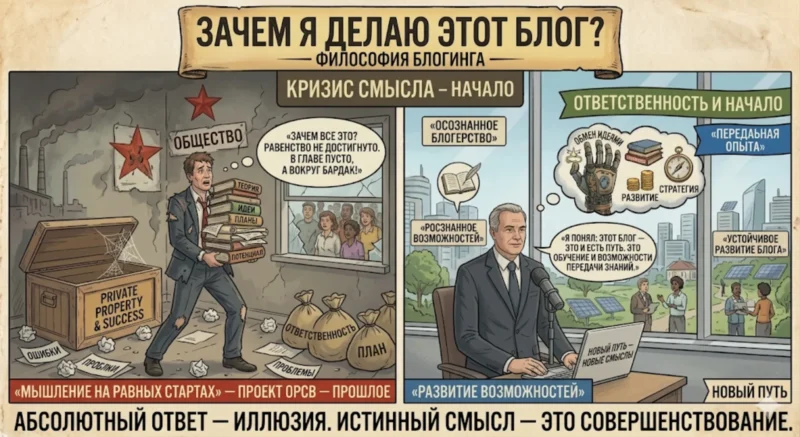 I believe the world can be made more just. I believe that a person shouldn't be doomed just because they were born in the wrong place, into the wrong family, or with the wrong opportunities.
Some might call my thoughts utopian. But everything great once began with an idea that seemed impossible.
If you've read this far, you're no longer just a random person. Perhaps you, too, share the idea of equal starting opportunities.
I'm not a hero or a genius. I'm an ordinary person. But I've lived a long life and realized: the problem isn't just with people. The problem is often with the starting conditions.
And if we one day learn to change this, a lot will change.
Support us
I run this blog alone. It's not a commercial project or a political campaign. It's my attempt to speak about justice, equal starting opportunities, and the future of humanity in simple, human language.
Today, my social pension is about $60 a month. It's enough for me to live modestly, but not enough to fully develop the project.
If this story resonates with you, please support the blog.
Even a small amount helps me continue writing, developing the site, and finding people who share the idea of an equal opportunity society.
300
500
Any amount
Replace the # link with your payment page, Boosty, YuMoney, PayPal, Patreon or other support service.
What is this page about?
This page tells Vlad's personal story: life in a Russian village, Soviet reality, social inequality, his journey through poverty, business, loss, and his belief in a society of equal opportunity.
Key topics: equal opportunity society, equal starting opportunities, social inequality, personal history, life in the Russian hinterland, a just society, overcoming difficulties.