- Who "Sold" Crimea? The Geopolitical Party of the 21st Century
- Crimea and the game of chess
- 👋 Introduction
- ♟️ Politics is chess, not a bazaar
- 💰 Could Ukraine "sell" Crimea?
- 🔒 Why the "deal" would be impossible
- 🎭 Crimea as a Trojan horse
- ⛽ Economic blow through oil
- 🧠 Who "led the horse" into the enemy camp?
- 📜 Three unofficial conditions
- 🧩 Coincidences and facts that are hard to ignore
- 🕵️ Was there a "deal" between the Kremlin and Kyiv?
- ⚖️ Who won and who lost
- 🧭 Conclusion and question for readers
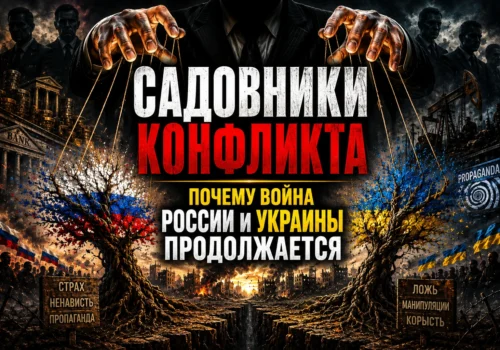
Who "Sold" Crimea? The Geopolitical Party of the 21st Century
Crimea and the game of chess
👋 Introduction
Hello, friends! My name is Vladislav, I'm 69 years old. My job often brings me into contact with people from all walks of life. I increasingly hear the line, "Ukraine's top leadership sold Crimea to Putin ." The argument is simple: "Not a single casualty, not a single shot fired—that means they banned shooting, and they banned it because they paid for it . "
At first glance, this seems like ironclad logic. But upon closer inspection, too many questions arise: who sold it , for how much , and with what funds could Russia have "purchased" Crimea?
♟️ Politics is chess, not a bazaar
Politics is a game of chess. The pieces make decisions, the pawns execute them. On the global board, the pieces are the United States and the collective West, as well as Russia. Ukraine is often relegated to the role of the playing field, sometimes a variable piece.
| Player | Role on the board | Features |
|---|---|---|
| 🇺🇸 US and allies | Chief Strategists | They play "white" and hold the initiative. |
| 🇷🇺 Russia | Jet player | More often forced to play "black" |
| 🇺🇦 Ukraine | Field and variable figure | Influences the course of action, but rarely sets the rules |
Western politicians possess refined diplomatic skills and financial leverage. Russia, as a rule, responds to pre-existing strategies.
💰 Could Ukraine "sell" Crimea?
Russia might have purchased Crimea if it had had a "counterparty." But in March 2014, there was none. From February 23 to June 7, 2014, Oleksandr Turchynov served as acting president— a temporary figure without any solid foundation.
Could he have secretly "sold" Crimea for a symbolic $10-100 million? Theoretically, anything is possible. In practice, these are unjustified risks.
🔒 Why the "deal" would be impossible
| Key issue | Reality |
|---|---|
| 🤐 Is it possible to hide the fact of the transaction? | Almost impossible: traces remain in documents and banking systems. |
| 🧾 Would the Kremlin keep the secret? | Unlikely: compromising information is always used at a convenient moment. |
| ⚖️ Legal implications? | Life imprisonment, confiscation, international scandal. |
| 💵 What if we're talking about billions? | It is impossible to carry out tranches of this scale without leaving a trace – this is the collapse of a young regime. |
🎭 Crimea as a Trojan horse
Realizing that Crimea was unsellable and difficult to hold, Western strategists could have opted for a more subtle approach: "gifting" Crimea to Russia , turning the peninsula into a perception trap . Outwardly, this would be a victory for Moscow, but in reality, it would mean isolation and sanctions.
| Goal | Movement | The effect |
|---|---|---|
| Transfer without war | Information "packaging" | Russia gains Crimea |
| Create an image of an aggressor | The "annexation" narrative | Isolation and sanctions |
| Weaken Russia's economy | Sanctions and the oil market | Falling income |
| Increase pressure within the country | Social costs | Voltage rise |
⛽ Economic blow through oil
In 2014, oil prices plummeted—by almost half. This put significant stress on Russia's hydrocarbon-dependent budget, with a weakening ruble, rising prices, and a reallocation of spending. Geopolitically, this is a classic way to wear down an opponent without direct confrontation.
🧠 Who "led the horse" into the enemy camp?
This combination required a figure with experience, flexibility, and a knack for bargaining. This figure was Petro Poroshenko, the future president of Ukraine: a pragmatic and experienced negotiator, skilled at navigating between centers of power.
📜 Three unofficial conditions
The logic of events suggests three unspoken points that are advantageous to the West and Kyiv and acceptable to Moscow:
| number | Condition | Substance |
|---|---|---|
| 1️⃣ | Russia's non-interference | Russia is not interfering in the protests in southeastern Ukraine. |
| 2️⃣ | Non-recognition of ORDLO | Donetsk and Luhansk do not receive international legitimacy. |
| 3️⃣ | Recognition of the 2014 elections | Moscow recognizes the elections, Poroshenko gains legitimacy. |
The actual chronicle of 2014 shows that all three points coincided with reality.
🧩 Coincidences and facts that are hard to ignore
- 🇬🇧 Russia did not support the mass protests of the Russian-speaking Southeast.
- 🗳️ The referendums in the DPR and LPR, conducted in analogy with the Crimean one, were not recognized by Moscow at that time.
- ✅ The 2014 elections were recognized by Russia, despite the "Yanukovych factor."
- 🚫 More than three million Ukrainian citizens who were in Russia did not actually participate in the voting.
The chain is too smooth for "accidents." Each link strengthens the next.
🕵️ Was there a "deal" between the Kremlin and Kyiv?
| Arguments for" | Arguments against" |
|---|---|
| A bloodless scenario of historical proportions. | This can be attributed to Kyiv’s confusion and the speed of events. |
| A coincidence of three advantageous points. | There is no direct documentary evidence. |
| The behavior of the parties after the events logically fits into the “agreement” version. | There are alternative explanations within the framework of diplomacy. |
There are no documents, but the logic and sequence of actions of the parties create the impression of a carefully calculated combination.
⚖️ Who won and who lost
| Player | What did you get? | What did you lose? |
|---|---|---|
| 🇷🇺 Russia | Crimea: A Surge of Patriotism | Sanctions, isolation, the fall of the ruble |
| 🇺🇸 The USA and the West | Reason for sanctions, strengthening control over Ukraine | Growing burden on budgets and military programs |
| 🇺🇦 Ukraine | International support | Territorial losses, dependence on external centers |
🧭 Conclusion and question for readers
Crimea returned to Russia without a single shot being fired. The world perceived it as an annexation, and the result was sanctions, economic pressure, and a new configuration of forces. Whether there was a "deal" is up to you to decide. I don't believe in miracles—I believe in logic and interests.
🤔 What do you think: was this a hidden agreement or a unique set of circumstances? Let us know in the comments—it's important to hear different perspectives.
Purchase the manual and receive valuable bonuses